
Showing posts with label 3DO. Show all posts
Showing posts with label 3DO. Show all posts
Monday, March 19, 2007

Sunday, October 29, 2006
American Laser Games History
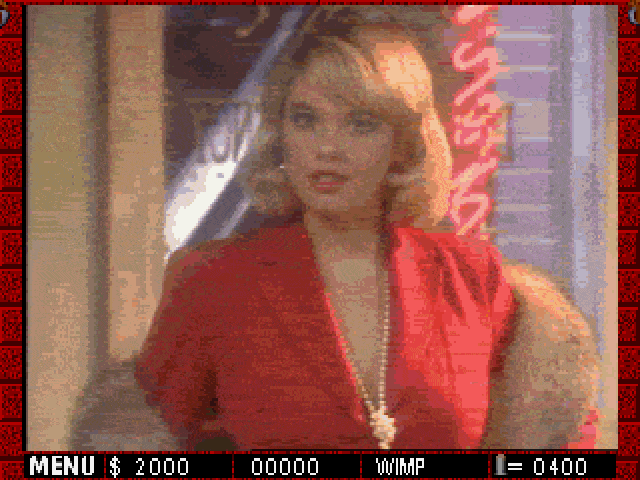
American Laser Games was a company based in Albuquerque, New Mexico that created a wide variety of light gun laserdisc video games. The company was founded in the late 1980's by Robert Grebe, who had originally created the system to train police officers, and later adapted the technology to more mainstream entertainment.
The company lasted until the late 1990's, by which time it had begun making games for the 3DO and "games for girls" for the PC (under the moniker Her Interactive), beginning with McKenzie & Co.. In 2001, the development and publishing rights to all of the games that were produced by American Laser Games were purchased by Digital Leisure, Inc. Many of these games were then re-released for the PC and in DVD TV game format.
The company also released a light-gun controller, the PC Gamegun, for home computer use. It proved unsuccessful, however, due to its poor accuracy.
Laserdisc + Light Gun Arcade Games
Mad Dog McCree
Who Shot Johnny Rock?
Gallagher's Gallery
Mad Dog II: The Lost Gold
Space Pirates
Crime Patrol
Crime Patrol 2: Drug Wars
Fast Draw Showdown
The Last Bounty Hunter
Shootout at Old Tucson
Monday, October 16, 2006
3DO History

Similar to the goal of the Phillips CD-I, a company called 3D0 set out to create a new standard in multimedia. Their creation became the 3D0 Interactive Multiplayer. It was capable of running 3D0 interactive software (games), Audio CD’s, CD+G, Photo CD, and Video CD’s using an add on. Rather then manufacturing their new system, 3D0 decided to make 3D0 Interactive Multiplayer a franchise. Sanyo, Panasonic and Goldstar all bought rights to manufacture the 3D0 system. Once produced and sold, 3D0 would claim a royalty for each system and $3 for each game sold.
In October of 1993, Panasonic began sales of the first 3D0 Interactive Multiplayer. The systems capabilities were clearly quite ahead of it’s time. Although it was not the first 32-bit system in history, the 3D0 was the first 32-bit system in the United States. The images shown are of Panasonic’s 3D0 models FZ-1 R.E.A.L 3D0 Interactive Multiplayer, and FZ-10 3D0 Interactive Multiplayer. There are several more models established by other companies, but other then a few additions they are all pretty much the same. As groundbreaking as the console was, the 3D0 was also one of the most expensive systems ever released. At a whopping $700USD or more, this machine only seemed to attract the wealthy. Even after a few price drops, the 3D0 never recovered from its initial reputation as a rich man's videogame system. Since 3D0 placed no software licensing restrictions, the 3D0 amassed a large library of games. Some quality titles such as “Need For Speed” and “Road Rash” became quite popular. Others (as with Atari 2600 titles) were sheer crap.
In 1995 the 3D0 company began announcing a new technology called 3D0 M2. This technology was rumored to have 7 times the power of any console released at the time. M2 would come standard in a new 3D0 system, or be used to upgrade existing systems.The 3D0 Interactive Multiplayer could have had the capability to compete even with newer 32-bit systems, but M2 never became reality. M2 technology was sold off to another company (Matsushita), and 3D0 machines never saw the upgrade. Gamers found themselves more interested in cheaper 16-bit consoles, and eventually newer 32-bit systems entered the market. 3D0 games and systems found their way into clearance bins starting in 1996.The system eventually died the end of that year.
FACT: 3D0 Interactive Multiplayer had only one controller port. However, this wasn't a problem since extra controllers (up to 8) could be easily daisy-chained to another controller. The original Panasonic controllers have a built-in stereo headphone jack along with a volume control dial. The system has its own internal memory to save games and other information. It has 2 expansion ports which were to be used for future upgrades such as memory cards, modems, digital video cartridges and the M2 system upgrade. The 3D0 was definitely designed for the long haul.
In October of 1993, Panasonic began sales of the first 3D0 Interactive Multiplayer. The systems capabilities were clearly quite ahead of it’s time. Although it was not the first 32-bit system in history, the 3D0 was the first 32-bit system in the United States. The images shown are of Panasonic’s 3D0 models FZ-1 R.E.A.L 3D0 Interactive Multiplayer, and FZ-10 3D0 Interactive Multiplayer. There are several more models established by other companies, but other then a few additions they are all pretty much the same. As groundbreaking as the console was, the 3D0 was also one of the most expensive systems ever released. At a whopping $700USD or more, this machine only seemed to attract the wealthy. Even after a few price drops, the 3D0 never recovered from its initial reputation as a rich man's videogame system. Since 3D0 placed no software licensing restrictions, the 3D0 amassed a large library of games. Some quality titles such as “Need For Speed” and “Road Rash” became quite popular. Others (as with Atari 2600 titles) were sheer crap.
In 1995 the 3D0 company began announcing a new technology called 3D0 M2. This technology was rumored to have 7 times the power of any console released at the time. M2 would come standard in a new 3D0 system, or be used to upgrade existing systems.The 3D0 Interactive Multiplayer could have had the capability to compete even with newer 32-bit systems, but M2 never became reality. M2 technology was sold off to another company (Matsushita), and 3D0 machines never saw the upgrade. Gamers found themselves more interested in cheaper 16-bit consoles, and eventually newer 32-bit systems entered the market. 3D0 games and systems found their way into clearance bins starting in 1996.The system eventually died the end of that year.
FACT: 3D0 Interactive Multiplayer had only one controller port. However, this wasn't a problem since extra controllers (up to 8) could be easily daisy-chained to another controller. The original Panasonic controllers have a built-in stereo headphone jack along with a volume control dial. The system has its own internal memory to save games and other information. It has 2 expansion ports which were to be used for future upgrades such as memory cards, modems, digital video cartridges and the M2 system upgrade. The 3D0 was definitely designed for the long haul.
Sunday, October 15, 2006
3DO History (1993 - 1994)

As the first 32-bit game system and arguably the most over-hyped machine in video game history, the 3DO promised to be much more than just a game console. Eschewing the "video game" label altogether, the system was marketed as an "interactive multiplayer", offering the ability to play audio, video, and photo disks in addition to games. It was the first (but not the last) attempt to deliver an "all-in-one box" to fulfill the age-old promise of "multi-media convergence". Despite its ambitious claims, the 3DO was ultimately exposed as an overrated game console that couldn't even compete with the 16-bit machines.
Unlike the other major console vendors of the day, the 3DO company never actually manufactured a system. Instead, it licensed its hardware technology to companies like Goldstar, Sanyo, and Panasonic, which produced different versions of the 3DO. One downside of this scheme was that the manufacturers had to make their money from the hardware itself (unlike Sega or Nintendo who could make up a loss with software sales). Consequently, cutting-edge gamers found themselves shelling out an astounding $700 for the system when it was first introduced. The 3DO amassed a respectable library of software, but it was mostly comprised of PC ports, full motion video (FMV) titles, and primitive polygon shooters. There were precious few arcade-style titles like those enjoying popularity on the 16-bit systems. Many of the 3DO's "exclusive" titles tanked, and the price of the system tumbled dramatically. By the time the Saturn and Playstation hit the scene, the 3DO had already faded into obscurity.
In concept, the 3DO was replete with flaws that would doom it from day one. The system was equipped with only one controller port, at a time when other systems were releasing multi-taps to accommodate a four and eight-player games. 3DO controllers could be "daisy-chained" together, but this was awkward. The next mistake was designing the original controller with only five buttons, despite the fact that six buttons were required to play some of the more popular games of the time. The 3DO had the ability to save games (and high scores) to memory, but its limited capacity could not be easily expanded (if at all). While all 3DO systems were supposed to be compatible, certain games didn't run well (or at all) on particular brands of consoles. The premise of an "all-in-one" multimedia center never materialized, because 3DO never really offered any legitimate entertainment options outside of games. Then there was the cost factor. Very few kids - who comprised the bulk of the game-playing market - could afford the system. Finally, 3DO falsely assumed that better looking, cutting edge games would be more fun to play, which of course is not necessarily the case.
The 3DO did produce a few notable hits, including superb versions of Madden Football, Road Rash, Need For Speed, and Samurai Shodown. Gex, a fun side-scroller starring a smart-aleck gecko lizard, provided the 3DO with an unofficial mascot. If you enjoy full motion video (FMV) titles, the 3DO produced some the best versions of these games, including Night Trap and Dragon's Lair. In the final analysis however, the 3DO failed to make a lasting impact on the video game industry.
Console design: D+. Several varieties of 3DO consoles were produced, but all resemble generic black boxes with few external controls. Some of the more heavy-duty models featured motorized CD trays, while other lightweight versions had cheap, pop-top lids. The single controller port is an unforgivable flaw that's almost comical. To its credit, the systems did support high-quality audio and video output, including S-video and surround sound.
Console durability: C-. Since the 3DO is basically a glorified CD player, dirty lenses issues can lead to disk read problems. Unfortunately, these problems are often confused with incompatibility issues exhibited by certain combinations of games and system models.
Controllers: D. The 3DO controllers are remarkably mediocre. With only five buttons (not counting the tiny "X" and "P" buttons), it was insufficient for many popular games (including Street Fighter 2), necessitating six-button alternative controllers. In addition, the controllers are cheaply constructed, with "loose" directional pads that make it too easy to accidentally hit the diagonal angles.
Media: B. It's hard to criticize the CD media for storing video games, but most 3DO titles misused the extra capacity of the medium by included gratuitous cut-scenes and generic pre-recorded soundtracks. 3DO games have varying load times, but in general it's not an issue.
Packaging: D. The tall boxes used to house 3DO games are definitely overkill, and they will waste a lot of room on your shelf.
Unlike the other major console vendors of the day, the 3DO company never actually manufactured a system. Instead, it licensed its hardware technology to companies like Goldstar, Sanyo, and Panasonic, which produced different versions of the 3DO. One downside of this scheme was that the manufacturers had to make their money from the hardware itself (unlike Sega or Nintendo who could make up a loss with software sales). Consequently, cutting-edge gamers found themselves shelling out an astounding $700 for the system when it was first introduced. The 3DO amassed a respectable library of software, but it was mostly comprised of PC ports, full motion video (FMV) titles, and primitive polygon shooters. There were precious few arcade-style titles like those enjoying popularity on the 16-bit systems. Many of the 3DO's "exclusive" titles tanked, and the price of the system tumbled dramatically. By the time the Saturn and Playstation hit the scene, the 3DO had already faded into obscurity.
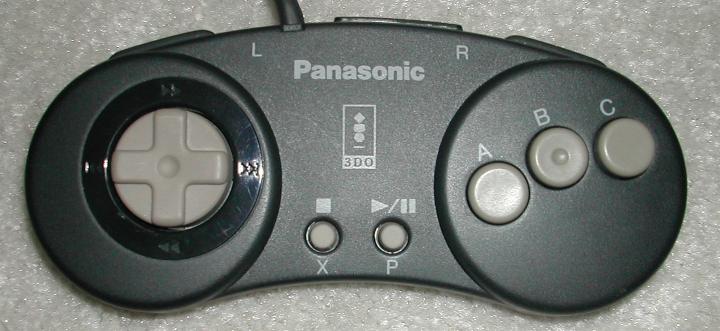
In concept, the 3DO was replete with flaws that would doom it from day one. The system was equipped with only one controller port, at a time when other systems were releasing multi-taps to accommodate a four and eight-player games. 3DO controllers could be "daisy-chained" together, but this was awkward. The next mistake was designing the original controller with only five buttons, despite the fact that six buttons were required to play some of the more popular games of the time. The 3DO had the ability to save games (and high scores) to memory, but its limited capacity could not be easily expanded (if at all). While all 3DO systems were supposed to be compatible, certain games didn't run well (or at all) on particular brands of consoles. The premise of an "all-in-one" multimedia center never materialized, because 3DO never really offered any legitimate entertainment options outside of games. Then there was the cost factor. Very few kids - who comprised the bulk of the game-playing market - could afford the system. Finally, 3DO falsely assumed that better looking, cutting edge games would be more fun to play, which of course is not necessarily the case.
The 3DO did produce a few notable hits, including superb versions of Madden Football, Road Rash, Need For Speed, and Samurai Shodown. Gex, a fun side-scroller starring a smart-aleck gecko lizard, provided the 3DO with an unofficial mascot. If you enjoy full motion video (FMV) titles, the 3DO produced some the best versions of these games, including Night Trap and Dragon's Lair. In the final analysis however, the 3DO failed to make a lasting impact on the video game industry.
Console design: D+. Several varieties of 3DO consoles were produced, but all resemble generic black boxes with few external controls. Some of the more heavy-duty models featured motorized CD trays, while other lightweight versions had cheap, pop-top lids. The single controller port is an unforgivable flaw that's almost comical. To its credit, the systems did support high-quality audio and video output, including S-video and surround sound.
Console durability: C-. Since the 3DO is basically a glorified CD player, dirty lenses issues can lead to disk read problems. Unfortunately, these problems are often confused with incompatibility issues exhibited by certain combinations of games and system models.
Controllers: D. The 3DO controllers are remarkably mediocre. With only five buttons (not counting the tiny "X" and "P" buttons), it was insufficient for many popular games (including Street Fighter 2), necessitating six-button alternative controllers. In addition, the controllers are cheaply constructed, with "loose" directional pads that make it too easy to accidentally hit the diagonal angles.
Media: B. It's hard to criticize the CD media for storing video games, but most 3DO titles misused the extra capacity of the medium by included gratuitous cut-scenes and generic pre-recorded soundtracks. 3DO games have varying load times, but in general it's not an issue.
Packaging: D. The tall boxes used to house 3DO games are definitely overkill, and they will waste a lot of room on your shelf.
Subscribe to:
Posts (Atom)


